/prod01/channel_8/media/marketing-media/news/news-2026/Minoo-Fazeli-collection-on-the-catwalk-at-LFW-2026.jpg)
Continuing my studies
With a previous master’s degree in Fashion Design and Bachelor’s degree in Architecture, I moved to the UK in 2025 to continue my studies. London is one of the world’s leading fashion capitals and a place where creativity, experimentation, and opportunity come together. For me, this was an important step toward developing my practice and pursuing my ambitions within the fashion industry.
My London Fashion Week Experience
Being selected for London Fashion Week happened at one of the most intense moments of my academic year – right in the middle of submitting my first-term university projects. I was initially asked to prepare six looks for the show, with only around six weeks to make it happen.
This was incredibly challenging as my designs were technically complex and I had limited sewing experience at the time. What made the experience possible was the encouragement and support of my tutor, Penny, who gave me the confidence to start constructing the garments myself rather than giving up because of the pressure.
While most students were on holiday after the term ended, I spent every day at university from morning until night, building the collection piece by piece. That process continued right up until the morning of the show when I successfully completed three looks for the runway.
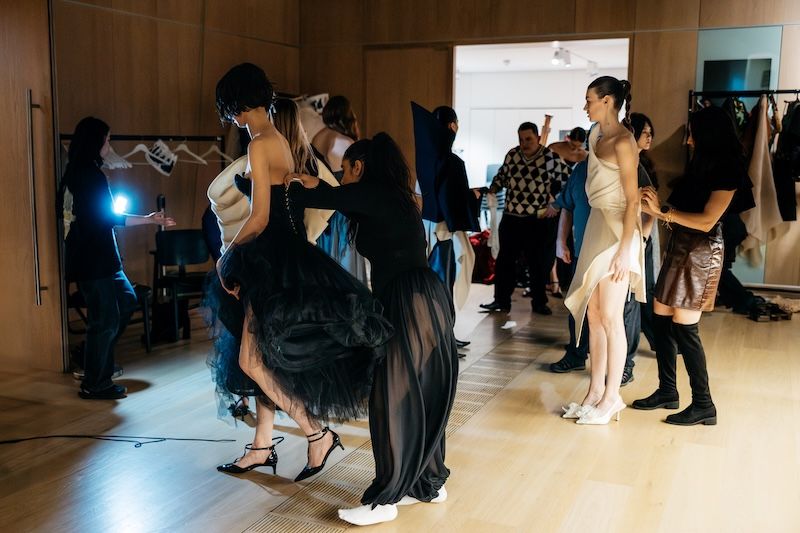
As this was my first fashion show, I was incredibly nervous because I had no idea what to expect. The pressure became even more intense when we arrived backstage and realised we had only around one minute to dress each model between looks.
Since my garments were structurally complex — with lace-up backs, multiple components, and detailed assembly — this was one of the biggest challenges of the day. These were pieces that ideally needed time, concentration, and calm, which is exactly what backstage doesn’t offer.
What really helped me in that moment was asking for support. Other designers and even the models themselves were incredibly helpful, and that sense of collaboration made all the difference in getting the looks onto the runway in time.
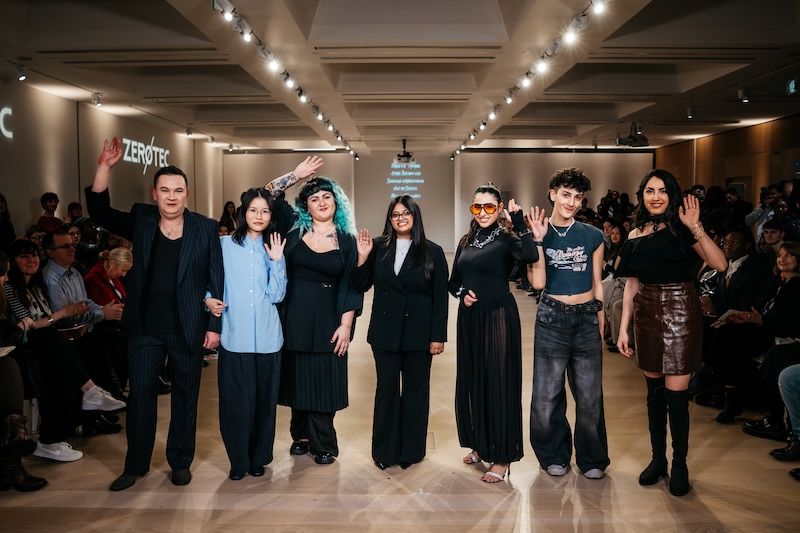
Despite the stress, it became one of the most valuable learning experiences I’ve had. And in the end, the most rewarding moment was walking onto the runway as the designer and hearing the audience’s applause — that was the moment all the exhaustion disappeared.
My top five tips
1. Be prepared before the opportunity
If possible, have a collection already developed or at least a strong foundation prepared. Opportunities can appear with very short notice, and being ready allows you to focus on improving quality rather than rushing to create everything from scratch.
2. Don’t be afraid to bring something visually distinctive.
Fashion shows are fast-paced and highly visual environments. Innovative silhouettes or strong forms naturally attract attention, encourage people to photograph and film your work, and can significantly increase your visibility after the event.
3. Design with backstage reality in mind.
One thing people don’t always think about is how little time you may have between model changes. In some shows, you may have less than a minute to change an entire look.
Beautiful design matters, but practicality matters too. Think carefully about fastenings, closures, and how quickly a garment can realistically be changed backstage.
4. Invest in strong photography of your work.
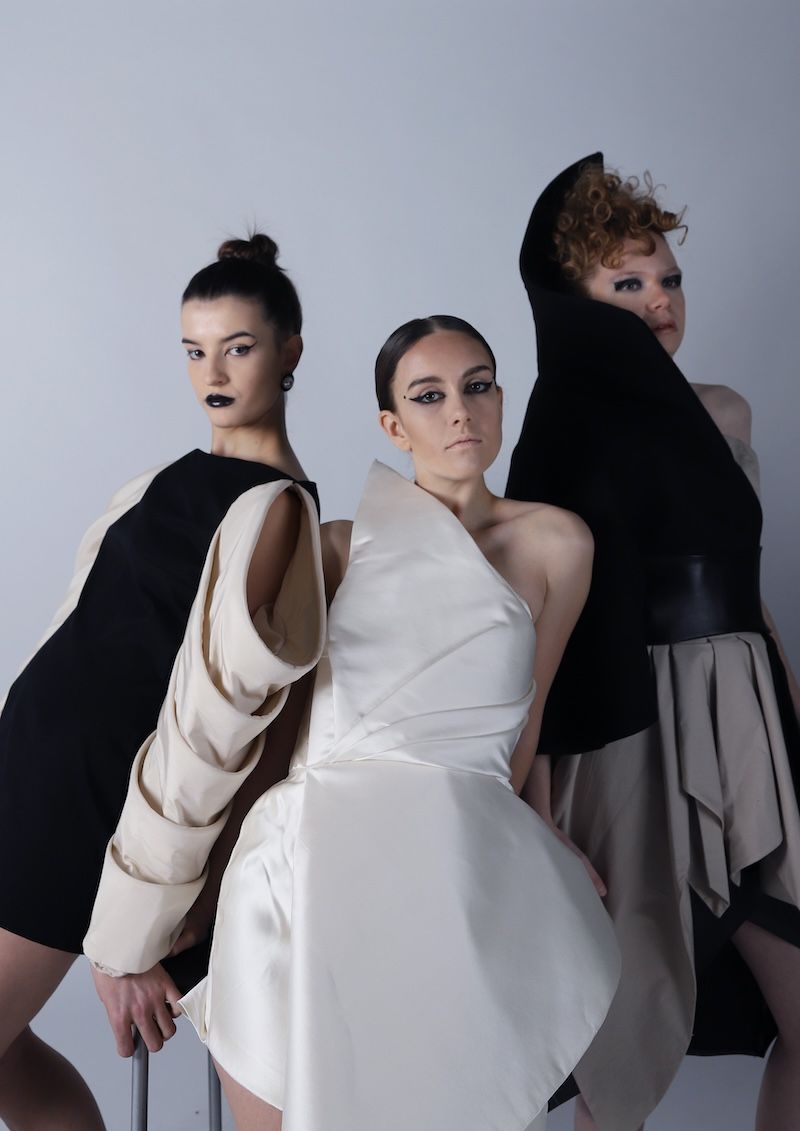
The show itself is only one moment, but the images can continue working for you long afterwards. High-quality conceptual photography can open unexpected opportunities, from publications to exhibitions and collaborations. In my own case, having strong images from my collection helped me get my work published in Vigour Magazine, which became a valuable opportunity for further visibility.
5. Keep looking for opportunities.
If showcasing on a runway is something you really want, stay proactive. Many independent fashion shows andopen calls appear in the months leading up to major fashion weeks.
Platforms like Instagram can be surprisingly useful for finding emerging opportunities and building visibility.
My biggest lesson
One of the interesting things I learned from the show was how important balance is in fashion presentation. While runway audiences appreciate creativity and experimentation, people also naturally respond to garments that still communicate beauty, elegance, and wearability alongside concept.
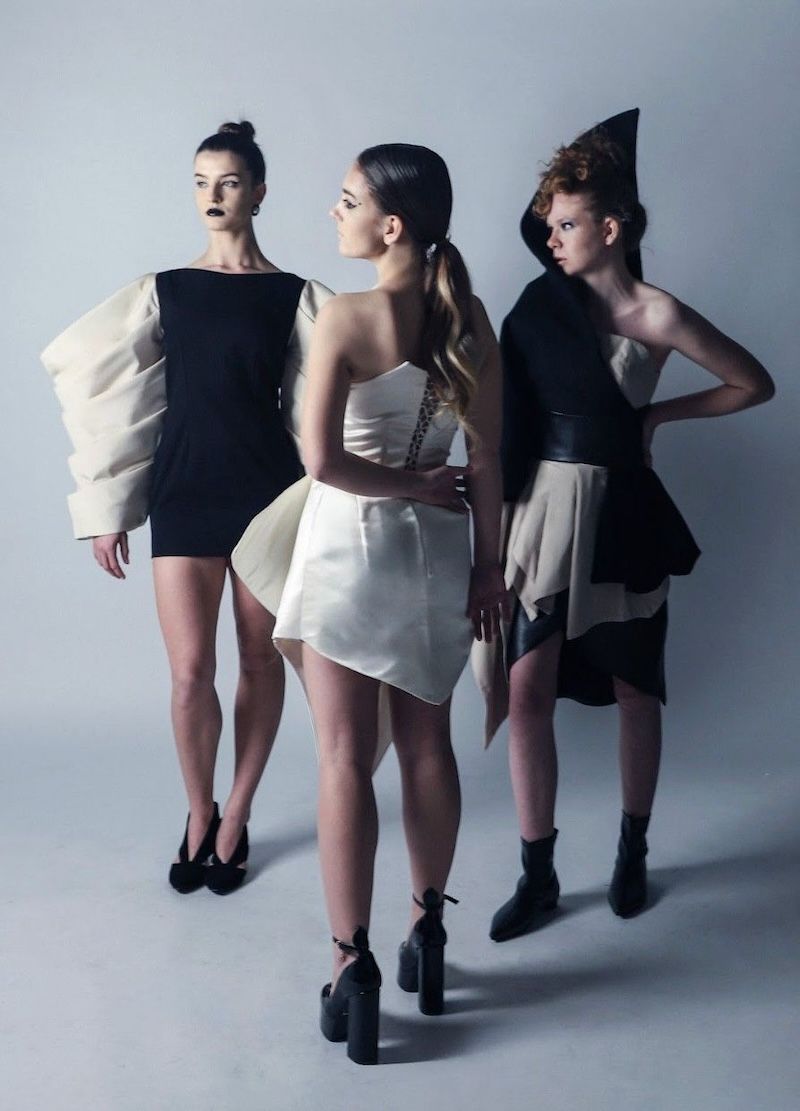
My collection aimed to balance sculptural, movement-inspired forms with a sense of femininity and visual refinement. I think this helped the work connect with a wider audience, as it offered both a strong conceptual narrative and an immediately engaging visual presence.
After the show, several people approached me to compliment the collection, particularly the silhouettes, structure, and the way the garments translated movement into fashion. The runway images also received strong attention afterwards, which helped increase visibility for the work and led to new creative conversations and opportunities.
What happened next
Since the London Fashion Week showcase, I’ve become even more motivated to continue developing my work through exhibitions, editorial publications, and future runway opportunities.
Finally, I’d like to sincerely thank UCA for creating opportunities that have helped me grow both creatively and professionally. Special thanks to Penny Lukalu and John Harrison for their encouragement, support, and belief in my work throughout this journey.
Follow Minoo on Instagram @mistoudio