


Centre for Creative & Immersive Technologies
The Centre of Creative and Immersive Technologies, led by Director Andrew Bossom, unites UCA’s existing areas of research excellence in Creative Technology (CreaTech), including Augmented Reality (AR), Virtual Reality (VR) and Extended Reality (XR), games, animation, sound design, digital heritage, AI, machine learning and computer vision.
This new Centre will build upon the emerging and distinctive strengths of UCA research, including CreaTech's benefits to health and wellbeing, social inclusion, and future skills development, through the university’s growing industry partnerships.
Andy Bossom brings extensive experience spanning games, immersive technologies, virtual production, artificial intelligence. The Founder and Director of the award-winning UCA Games Incubator Studio, Andy has also worked on a variety of UK Research and Innovation (UKRI) funded projects including XR Stories (EPSRC) and also EU-funded EIT Culture & Creativity research initiatives. Andy was also part of the teaml eading the £2.3m Games and Innovation Nexus (GAIN) project– a consortium with University of Surrey, University of Warwick and UCA, funded through the UKRI Connecting Capability Fund.
Our Projects
How can design research and emerging technologies transform the way we capture, interpret and experience our cultural heritage?
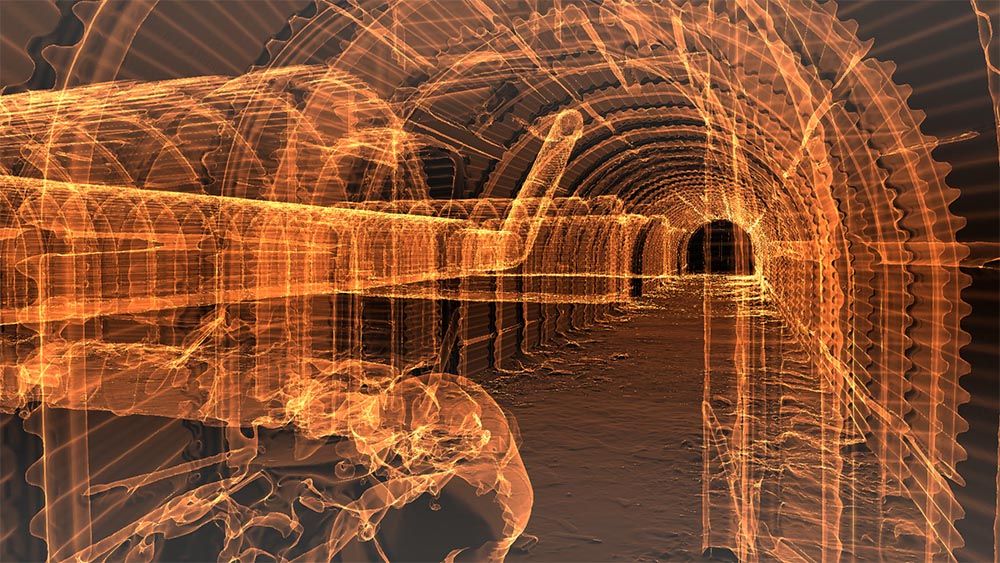
A render taken from the subterranean scan of the Fortress Deep Shelter. These are part of the network of plotting rooms and shelters used by the armed forces to provide defensive and offensive artillery in the English Channel and beyond. Wanstone was home to the largest guns ever mounted on land in the UK (15inch bore, battleship guns), and the Fortress Plotting Room and its associated Deep Shelter were the first of their kind developed and became the template for other installations around the coastline of the UK.
At the UCA Canterbury School of Art, Architecture and Design, our TrakLAB provides a nexus for interdisciplinary research, bringing together advances in digital capture technologies with creative practice and collaboration across the heritage and cultural sectors.
Our research develops along two interconnected directions. The first explores the capabilities of 3D scanning, spatial data and digital reconstruction, investigating how emerging technologies and experimental processes can reveal, record and reinterpret physical environments. The second engages directly with heritage organisations and civic partners, including the National Trust at Wanstone and Canterbury City Council's Museums team, exploring real-world challenges around conservation, access and public engagement.
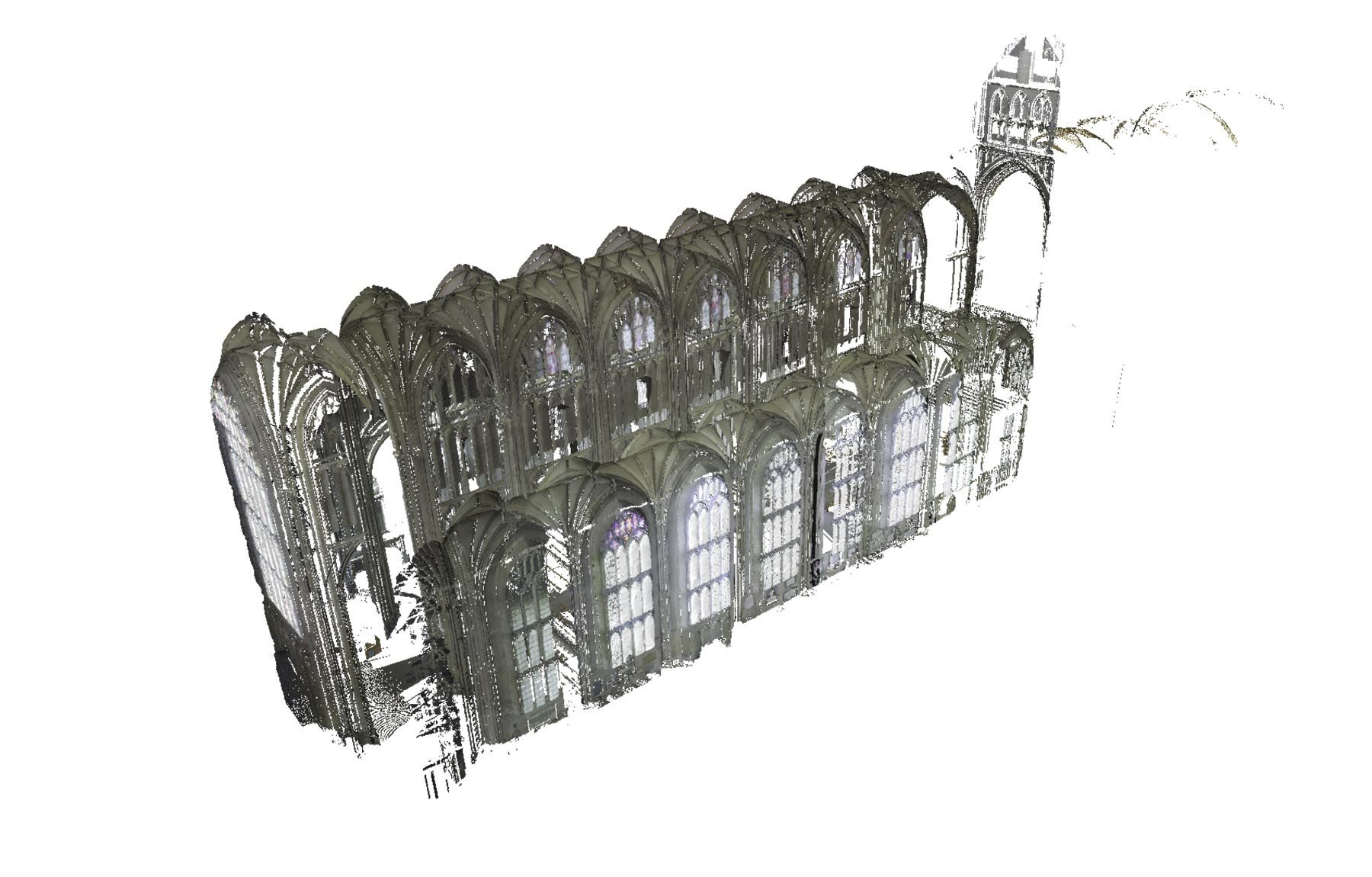
These scans were captured using a combination of Artec Ray 2 terrestrial Lidar, and Artec Leo handheld scanners. The scan registration was completed in Artec Studio, and visualisation produced in Twin Motion.
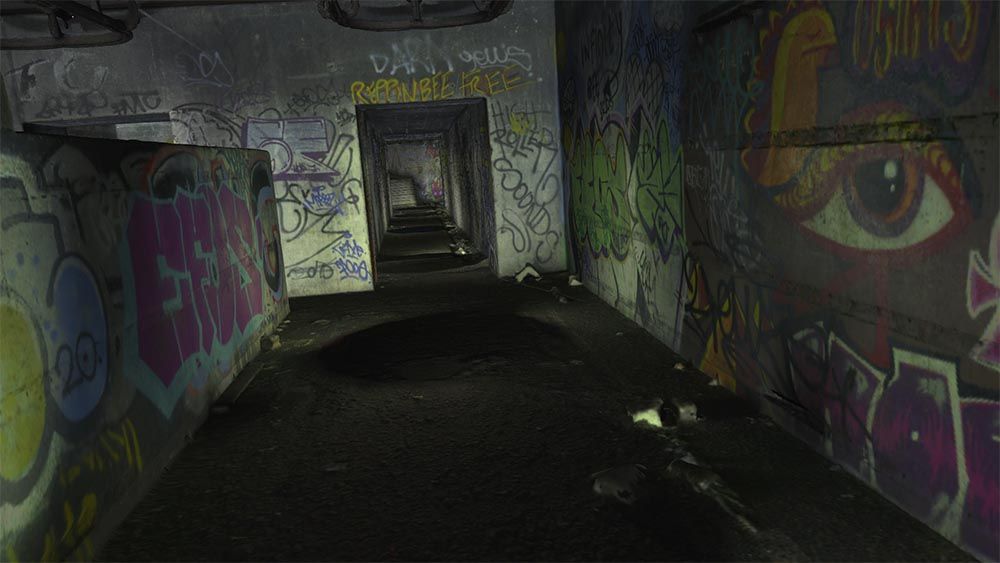
This render of the scan from Southforeland Magazine, and shows the remains of the shell hoist and graffiti from the structures post war use as a rave venue in the 1990's.
Emerging from this intersection is Heritage Layer, a design-led technology venture developing new ways to transform complex digital heritage records into accessible, interactive experiences for museums, researchers, educators and the public.
Together, these projects demonstrate how creative research can bridge technological innovation and cultural practice, generating new tools, experiences and opportunities for understanding and engaging with our shared heritage.
View more information on LinkedIn
Thomas Sidney Cooper (1803–1902) was a Canterbury butcher’s son who left school at twelve, taught himself to paint and became one of Victorian England’s most celebrated artists. In 1868 he used his fortune to found a free art school for all, which went on to become the University for the Creative Arts in Canterbury. Today both Cooper’s art and his philanthropy are largely forgotten, yet his connections to Canterbury’s contemporary arts scene run deep.
Partnering with the Sidney Cooper Arts Trust, the Beaney House of Art and Knowledge and Starpal.AI, this project brings Cooper back into conversation through an interactive AI avatar. Trained on his autobiography, letters and archives, it lets visitors talk with him about his life, art and values. But it goes beyond a talking portrait. Most AI characters have fixed knowledge; the Cooper avatar will keep growing.
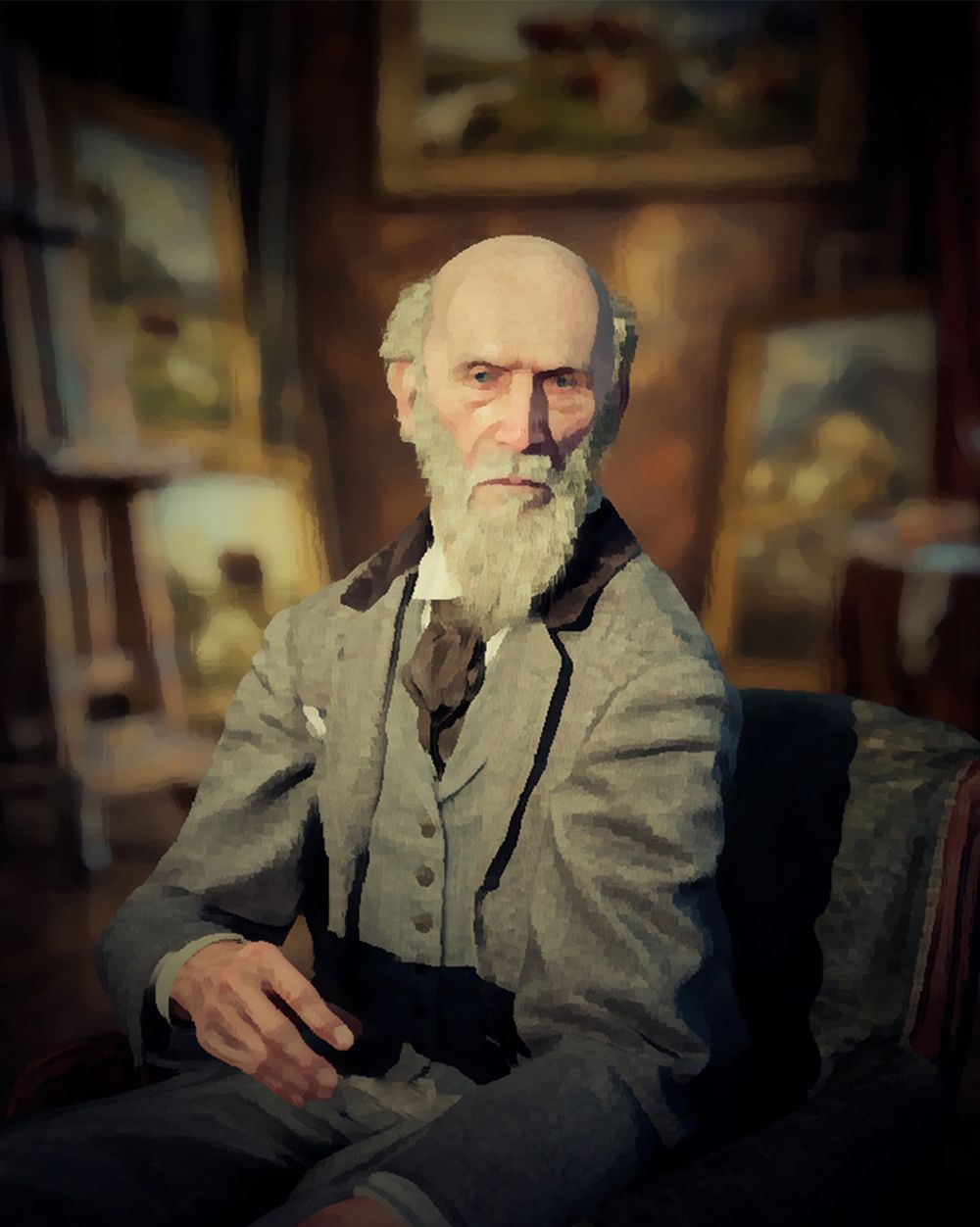
In collaboration with UCA and Starpal.ai, the Sidney Cooper 3D Avatar was created by UCA Games alumni and freelance 3D Artist, Arnas Klimasauskas.
Over time, local people will be able to contribute oral histories that become part of what it knows, and it will openly credit them whenever it draws on their memories. The result is a living archive and a model for representing real historical figures with AI transparently and ethically.
Stonehenge VR is an immersive, speculative archaeoastronomical reconstruction that takes users on a journey through four distinct periods, from prehistoric Stonehenge to the present day.
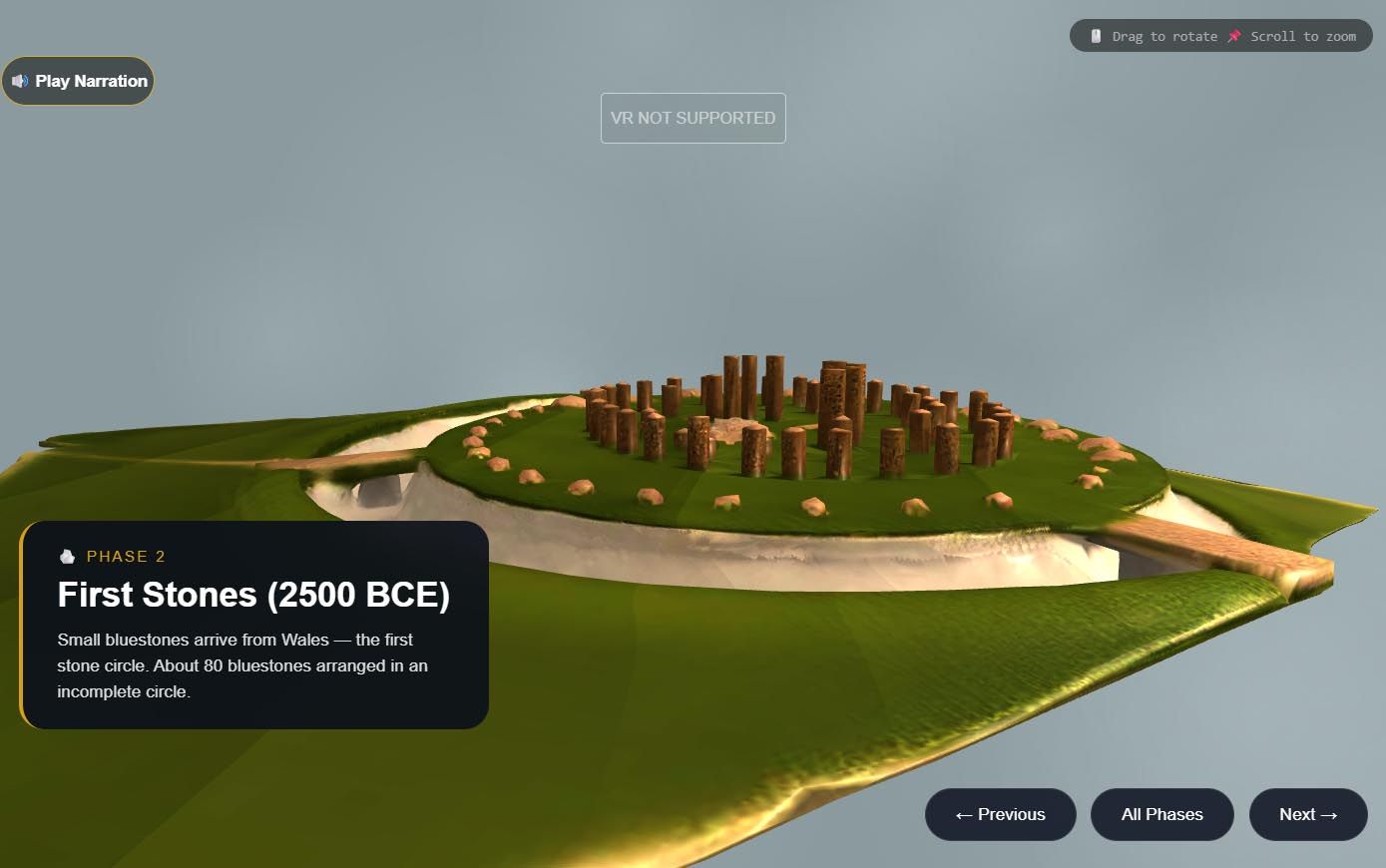
Designed as an experimental research environment, the project enables archaeologists to experience the monument through embodied exploration, investigate astronomical alignments and test competing hypotheses about its changing architecture and relationship with celestial events.
Through interactive time-travel mechanics, reconstructed landscapes and astronomical simulations, users can explore how different configurations of Stonehenge may have shaped the observation of the Sun, Moon and seasonal cycles.
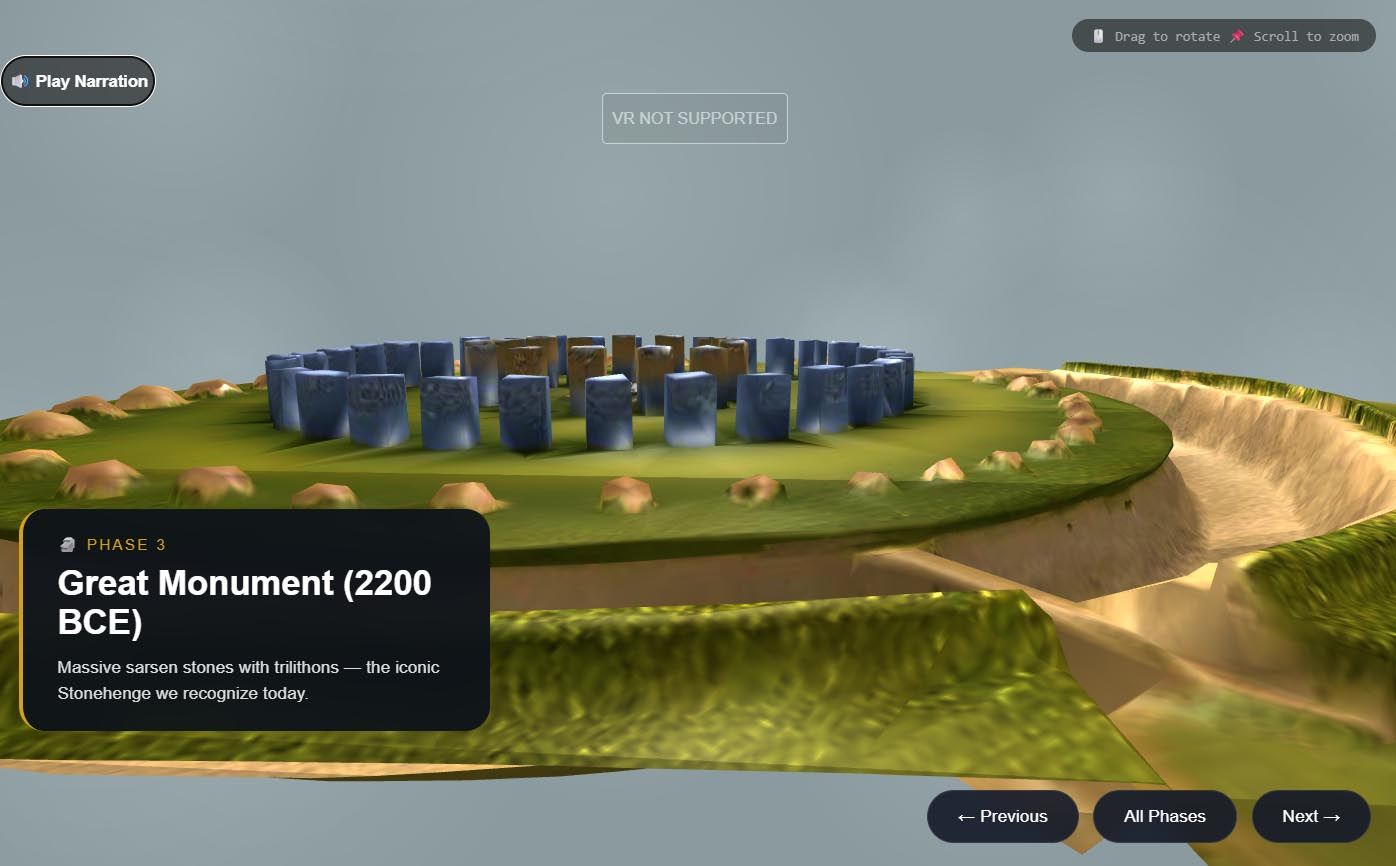
Distinguishing archaeological evidence from interpretation and speculation, the project demonstrates how virtual reality can move beyond heritage visualisation to become a tool for archaeological enquiry and hypothesis testing.
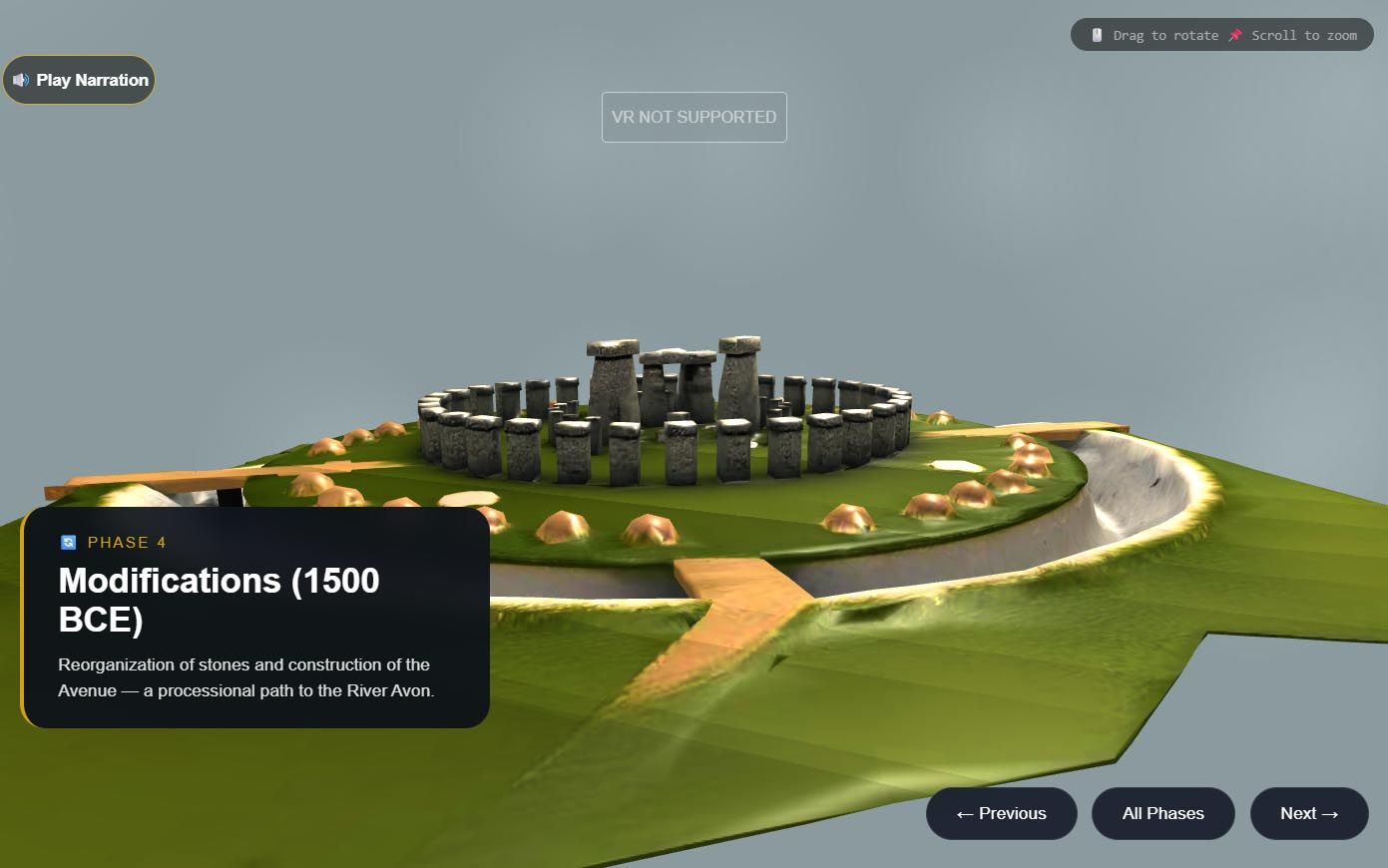
Developed collaboratively with students, it brings together interdisciplinary research, immersive technology and practice-based teaching.
A collaboration between UCA and Stopgap Dance (global leaders in disability access in dance), to explore the barriers to access disabled individuals may face when using motion capture (mocap) technology.
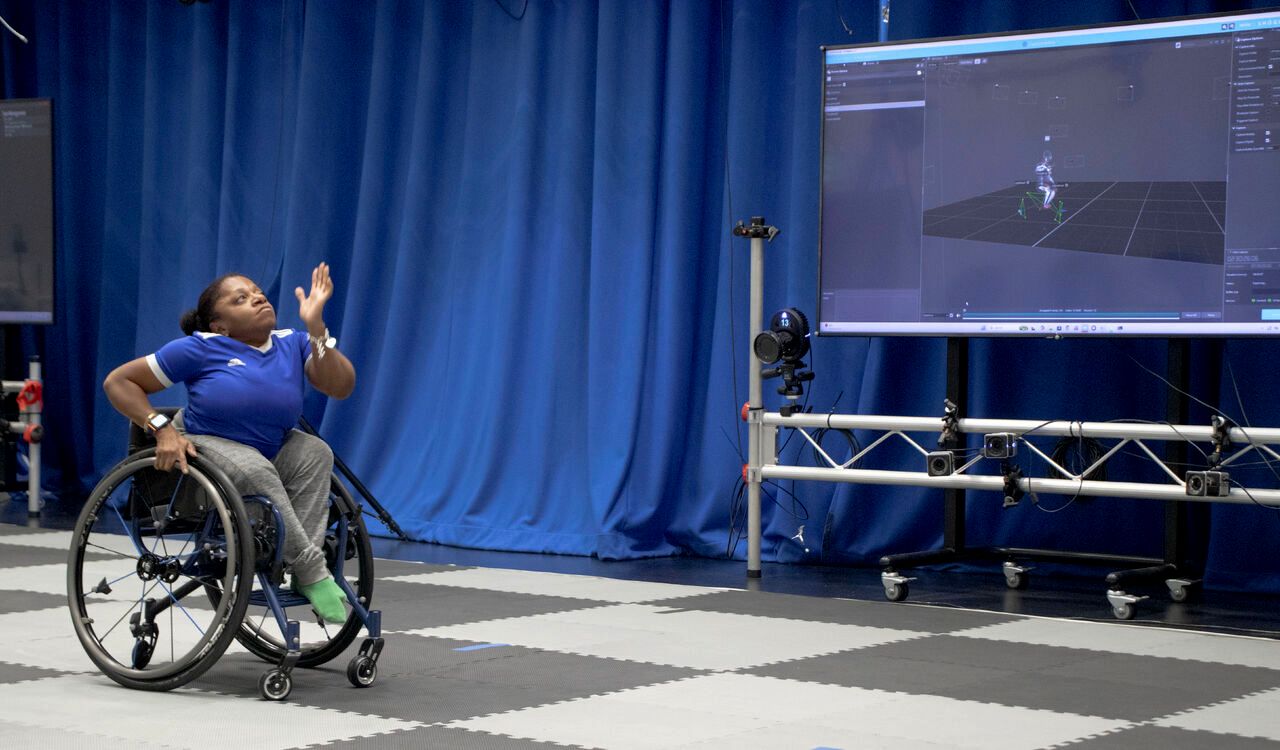
Monique Dior Jarret, known as Mo, of Stopgap Dance Company performing at the Vicon motion capture research facility in Oxford, UK. Exploring and testing their new Vanguard markerless camera system for disabled performers.
The research team conducted 5 collaborative workshops in the UCA mocap studio and a follow-up post-mortem. These workshops uncovered significant access barriers for disabled performers when using mocap technology - specifically that performers were effectively "invisible" to the mocap system if they could not perform a standard "A-pose" (standing straight with arms out at 45 degrees).
Collaborating directly with the performers, the team was able to develop practical workarounds, although, due to the differing nature of the performers' physicality’s, these workarounds were not effective for all performers, and it was noted that further improvement would likely require the involvement of the system's creators.
The research caught the attention of Vicon, a global leader in motion capture technology and the creators of the high-end motion capture system at UCA, leading to Vicon becoming research partner to the project. Members of the Vicon product team were able to attend a workshop, allowing them to witness first-hand the significant barriers encountered by disabled performers, and gain an understanding of how the system is predicated toward symmetrical able bodied performers limits accessibility.
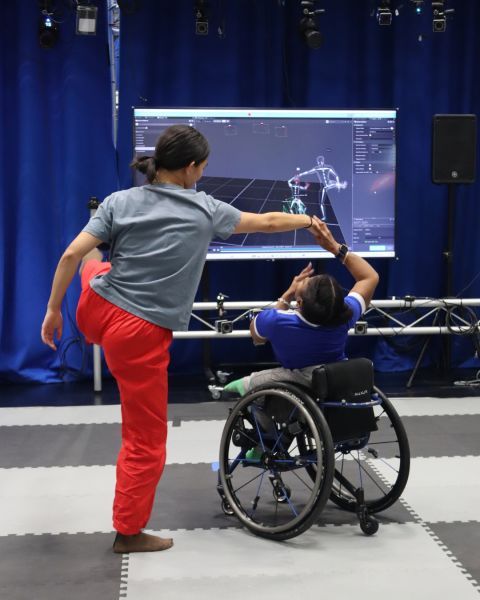
Stopgap Dance Company, Emily Lue-Fong dancing with Monique Dior Jarret, exploring markerless motion capture for disabled performers at the Vicon R&D facility.
Vicon invited both UCA and Stopgap to visit their research facility in Oxford to test their new “markerless” motion capture technology, utilising their Vanguard camera system, and to assess whether the new capability presented or mitigated accessibility issues for disabled performers.
View more information on LinkedIn or visit the Stopgap Dance Company website
Card Game Arena (CGA) is a 12-month Main Innovation project funded by the European Institute of Innovation and Technology (EIT) Culture & Creativity, with a total budget of €500K and EIT grant of €350K. It provides a context for UCA to partner with the Little Chicken Games Company (Amsterdam, Netherlands). The project develops a platform for designing, testing, and publishing digital card games without the need for programming skills.
UCA’s interdisciplinary team is made of Professor Elisabetta Lazzaro (UCA’s lead), Andy Bossom, Dr Xinya You, and Dr Xinge Tong, and involves the collaboration between the Arts and Creative Ecosystems research & innovation cluster (ACEs) / Epsom School of Creative Business, Fashion and Enterprise (EL, XY, XT) and the Centre for Creative and Immersive Technologies (AB).
UCA’s business research and innovation activities contribute business model innovation and validation, user testing robust framework and implementation, scalability, product positioning and market development, and financial sustainability in the gaming industry in real-world settings. The contributed business model innovation encompasses users’ accessibility, empowerment and co-creation, sustainability, EU gaming market development, and financial viability. As such, the project represents a unique practice-led knowledge exchange between academia and a key creative business in EU / international settings.
The product positioning to the marketplace focuses on the indie developer, and or hobbyist, who wishes to develop their own digital card games. The sub section of the game design market connects to a variety of knowledge bases, experience and abilities as they utilise the product to realise their own game designs.
The live industry facing project has also seen the engagement of UCA’s Game students in Applied Creative Education, where they were part of users testing different versions of the prototyped platform. As such, the research project presents a partnership opportunity between an academic / industry lead model of cyclical engagement over a period, designed to facilitate a subject specific cohort, to access new learnings from an industry lead challenge. It provides a context for the process of learning within a collaborative real-world experience of iterative game development, with a game’s studio, supporting the development and launch of a viable product to market.
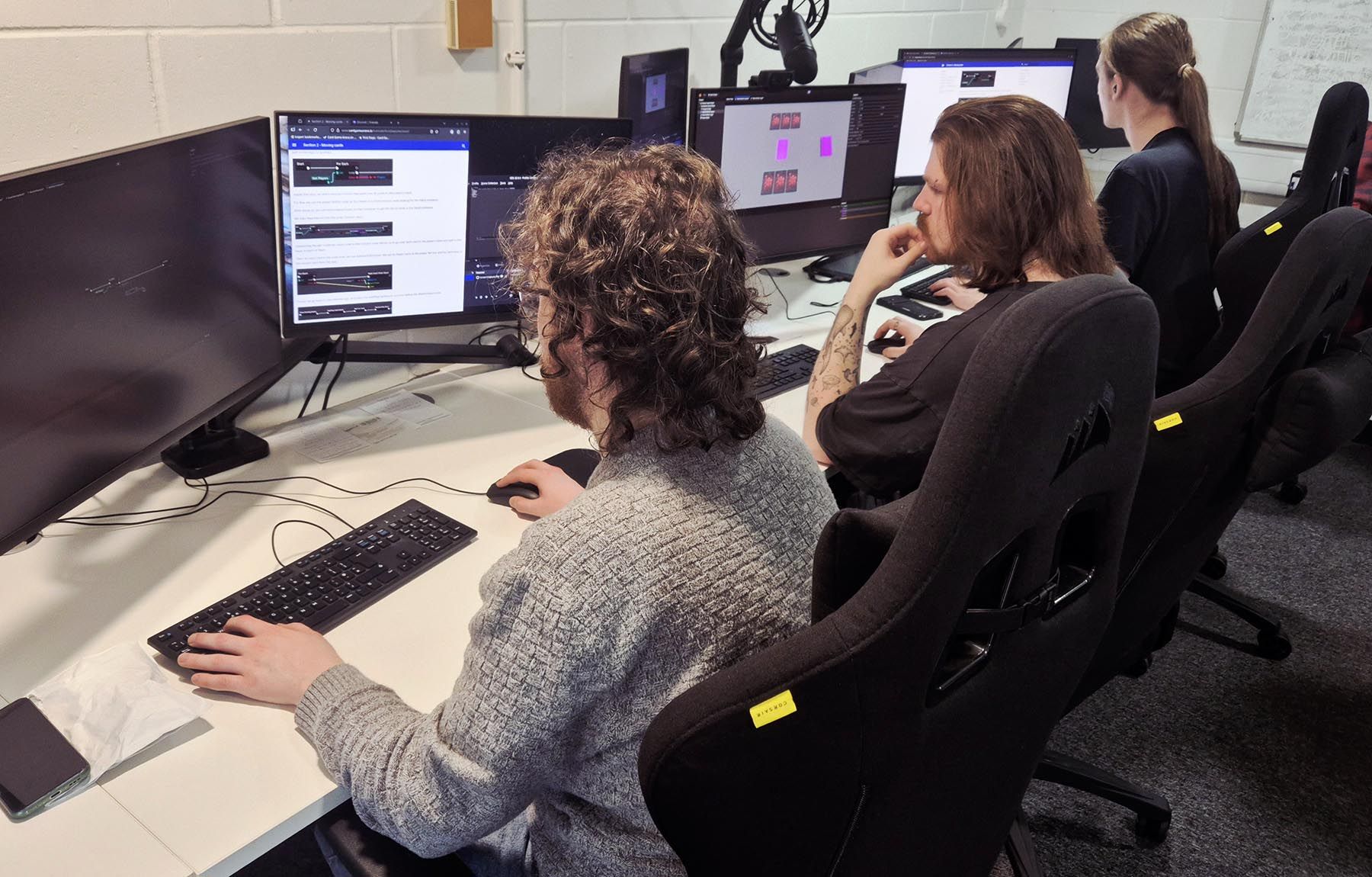
Our UCA Games cohorts have been in engaged in iterative testing and feedback for the Dutch games company Little Chicken Games, Card Game Arena, throughout the funded research project, supporting the development of unique IP to market.
During the process of engaging in a co-tested co-developed software development, the product underwent rigorous and iterative testing, leading to two productive points of engagement in a higher education learner setting. One being long form, over the academic year, supporting the whole duration of the funded research project, and the other, being short form engagement, based around existing industry facing unit delivery.
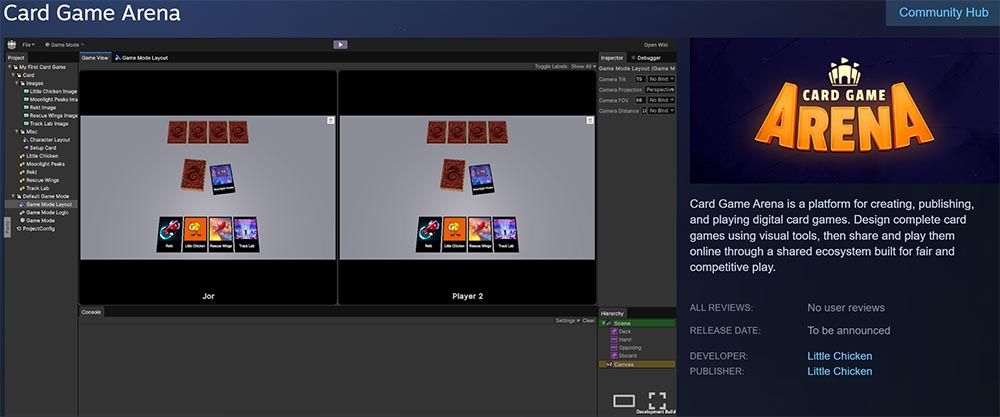
Card Game Arena is available online on STEAM: https://store.steampowered.com/app/4019280/Card_Game_Arena/
Project main outcomes:
- Lazzaro, E., Tong, X., & You, X. (2026). Disentangling competitive features in video games development through user review analysis (under submission to peer-reviewed journal).
- Lazzaro, E., Tong, X., & You, X. (2026). Disentangling Competitive Features in Video Games Development through user review analysis”, 12th European Workshop on Applied Cultural Economics (EWACE), University of Porto (peer-reviewed conference presentation).
Impact study currently ongoing.
Explores how game designers respond to the gaps in the archaeological record. Its case is the Başur Höyük gaming assemblage, a set of carved gaming pieces around five thousand years old, now held at Batman Museum in southeastern Türkiye. The pieces survive; the rules do not. We know these objects were played with, but not how, by whom, or what playing them meant.
Rather than trying to reconstruct a single “correct” game, the project treats this absence as a design space. Through a research visit to the museum and two speculative game design workshops, one at Bahçeşehir University in Istanbul and one at the University for the Creative Arts in the UK, participants build playable propositions around the assemblage. We examine how designers handle uncertainty, which assumptions they bring to fragmentary evidence, and how speculation itself becomes a method for thinking with the past.
Funded by UCA’s Research Project Fund, Playing the Unknown brings together game studies, speculative design and archaeological interpretation. It asks what it means to play with objects whose original play is lost.
A 12-month project exploring the use cases of per-market prototype modular game controller technology with a view to include disabled players with limited dexterity. The initial research is focused on a gamer with Cerebral Palsy, normally a one-handed player.
Investigating game controller design, norms of two-handed play, and redesign of a modular controller set up, assessing the potential for new forms of joystick and game controller configurations that offer greater contact, dexterity and engagement for the disabled player (3D printing alternate concepts for weak hands).
A project with an applied education component, allowing student engagement - testing builds and loadouts focusing on inclusion, and accessibility for one-handed play with a pre-market industry prototype.
MORYOW: a pioneering collaborative practice-as-research project that explored the production pipeline for creating short form genre work within Virtual Production on an independent budget.
The film MORYOW follows Sammie, a young crabber who is haunted by a recent loss and spiralling through addiction. When she boards an enigmatic fishing vessel sailing to a forbidden fishing ground, she soon understands she is trapped in a cyclical nightmare.
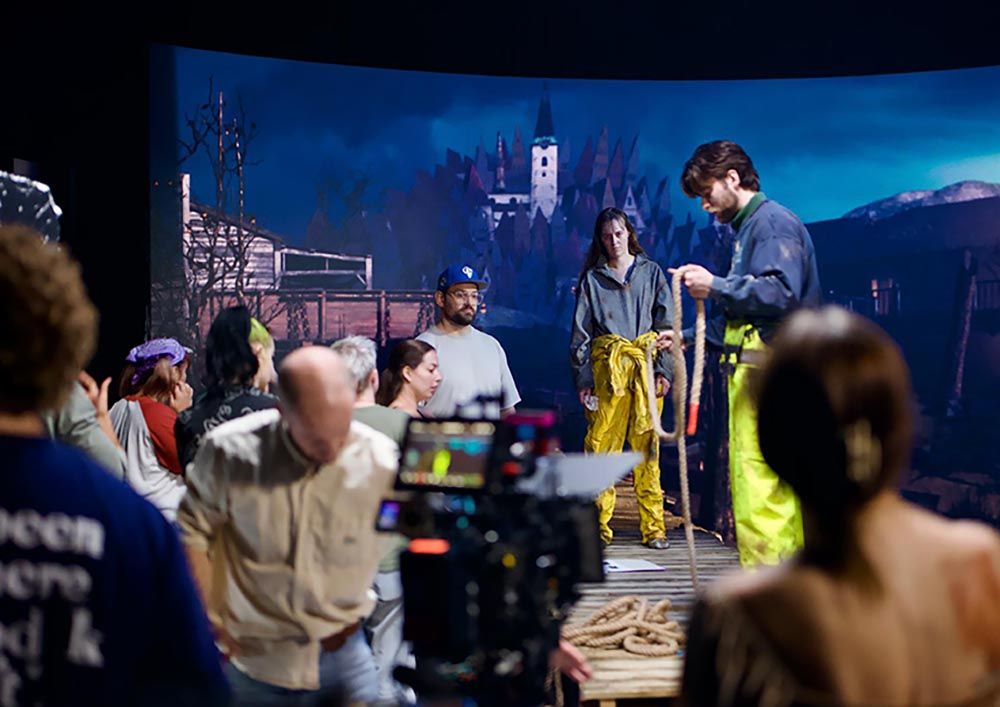
Waking up in her small fisherman’s cottage and desperate for another fix, she discovers a cryptic note seeking crew for a fishing boat called The Carcosa. The boat is captained by Ant who is heading to “The Deep,” a fishing ground avoided by others. This stretch of dark water holds an unknowable power. He’s not keen to bring her along, but she’s insistent and he is in a hurry.
As the boat heads into open water, the sea itself seems to turn against them. Out of the eye from a gathering storm, a terrifying entity rises from the depth and ensnares them in its trap. Ant reveals that “The Deep” feeds on their darkest fears and regrets, prompting Sammie to confess the devastating loss of her unborn child, a wound fuelled by addiction.
Despite the terror and the weight of her past, Sammie is urged by Ant to confront the creature and break the cycle of recovery and relapse that she is in. He lets her know that it will not let them leave until they show it their worst selves. They must face whatever this is, or it will consume them.
On the precipice of oblivion, Sammie steels herself to confront a horror beyond human comprehension. She steps out onto the prow and faces down the monster, roaring back at it in defiance.
However, as she wakes back up on the same beach she started on, has this all been a trick that her addled brain has been playing on her and in fact she is destined to repeat this cyclical narrative over and over again and again?
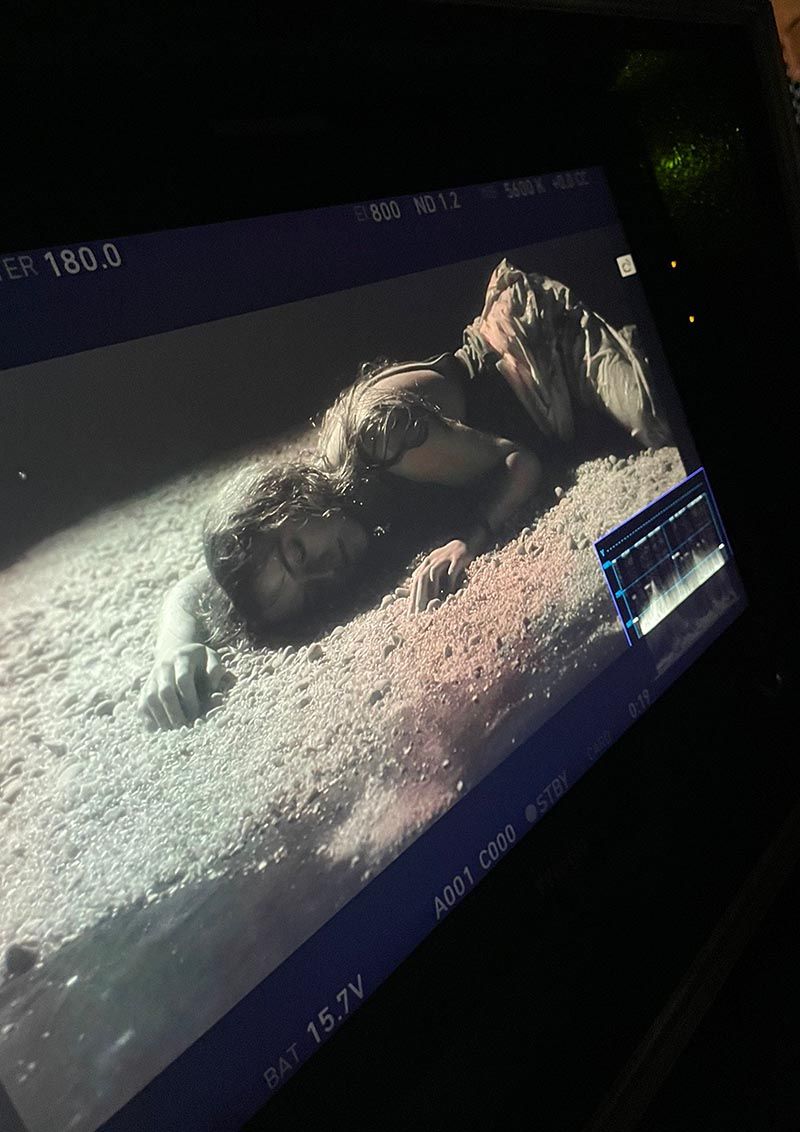
Director Ted Wilkes said this about the virtual production research project:
“MORYOW contained many firsts for us as practitioners and as an institution. We had academics and students from across the campus engaged with this project. It was brilliant to be able to work in such a collaborative and interdisciplinary way to push the creative and technological resources available to us at UCA. I am incredibly proud of the output and look forward to being able to share it in MORYOW: The artifice of dread.”
Documentary filmed and edited by Paul Usher:
An Innovate UK-backed immersive VR and smart device experience helping young people understand anxiety through movement, storytelling and interactive technology.
EmbodyXR® transforms anxiety support into something young people can actually feel, not just think about.
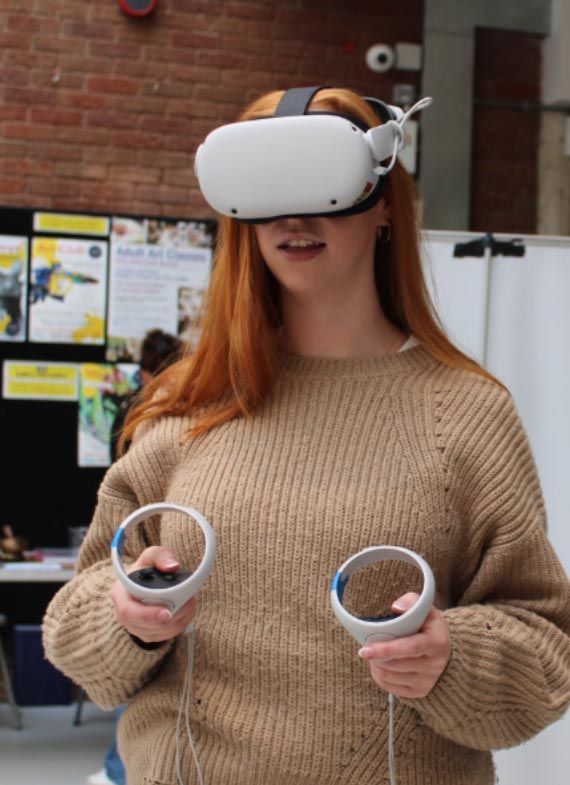
Built at the intersection of movement, immersive storytelling and interactive technology, EmbodyXR® guides young people through choreographed challenges, responsive environments and immersive soundscapes designed to support emotional awareness and regulation in real time.
Utilising the universities industry standard Vicon motion capture facility has support the vision of EmbodyXR® to create and share engaging immersive VR experiences to the player.
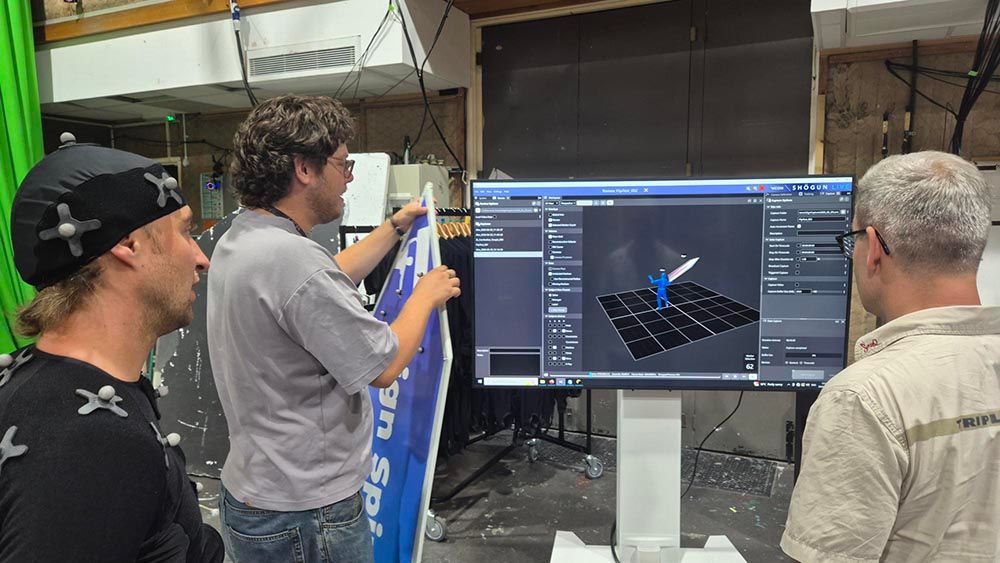
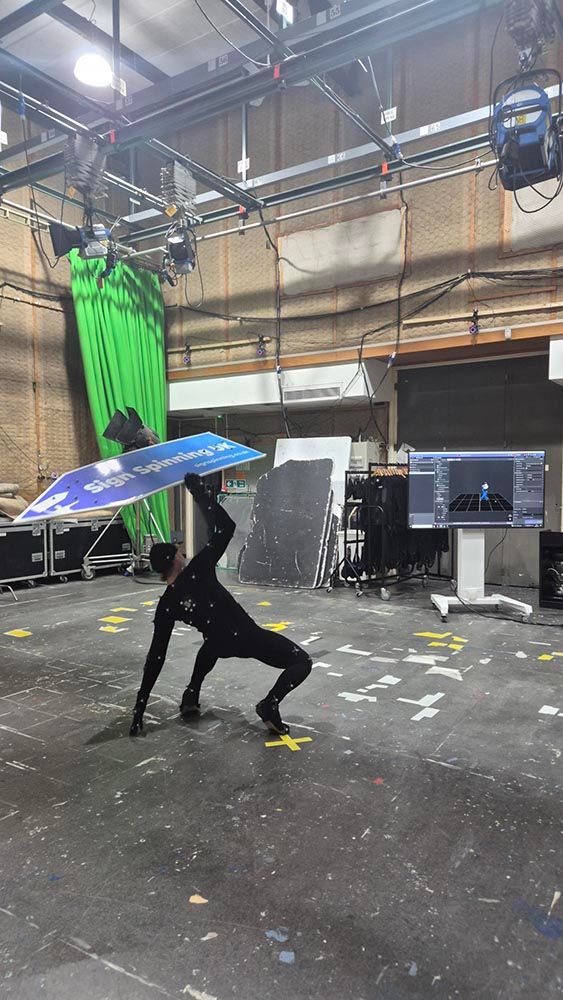
The amazing Alex Kleißle! The World Sign Spinning Championship No.4 motion capture performance with Mercurial Dance for Embody XR at UCA's Vicon motion capture facility.
Embody XR is made by Mercurial Dance, a movement-led creative technology company combining more than 20 years of choreography and performance experience with in-house expertise across immersive technology, XR, motion capture, games and interactive experience design. They create original work and collaborate with cultural organisations, games studios, universities and research partners to develop experiences where movement shapes how people play, participate and interact.
Partnering with Starpal.AI, this project aims to transform training in the video game sector by introducing a cutting-edge, AI-powered learning solution.
Focused on addressing critical skill gaps, the program provides professionals and students with hands-on experience in integrating artificial intelligence into game production workflows, empowering them to innovate responsibly and stay competitive in a rapidly evolving industry.
The training platform leverages an advanced virtual teaching assistant---an AI driven interactive avatar---to create a personalized and engaging learning experience. This avatar uses natural language processing (NLP) to offer real-time guidance, respond to learner queries, and recommend resources tailored to individual progress and interests. By combining gamified learning elements with adaptive feedback, the platform ensures users remain motivated while acquiring practical skills.
The University for the Creative Arts (UCA), collaborating with StarPal.ai to explore the previously uncharted depths of AI-powered avatars, specifically in the fictional narrative sphere.
StarPal.ai channelled their expertise into the emerging field of AI avatars by partnering closely with the staff at Jane Austen’s House. Their collaborative effort aimed to create a meticulously curated knowledge base for the AI, ensuring it is both accurate and comprehensive.
This repository includes a rich array of original texts and cited works by Jane Austen, supplemented with historical facts, contextual details, and scholarly insights from reputable sources. The AI was trained on this extensive knowledge to deliver precise interpretations and engage users in a sophisticated, conversational manner. The knowledge base, a treasure trove of Austen’s original works, historical tidbits, and scholarly insights, ensures the AI isn’t just a pretty face—it's a well-informed conversationalist. The AI was trained to interpret this wealth of information with precision, sparking conversations as delightful as Austen’s own wit.
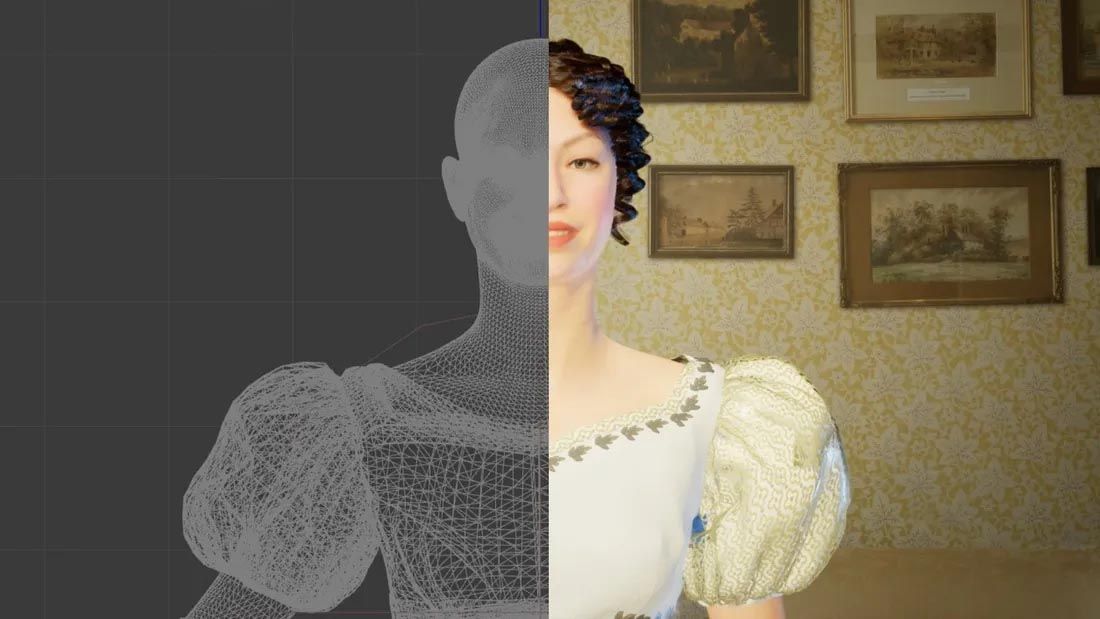

StarPal.ai and competition winning BA (Hons) Games Arts graduates Chloe Kethero and Milo Ebsworth collaborated closely with the Starpal.ai development team to deliver the final technical asset, which was showcased at Jane Austen’s House museum in Chawton, Hampshire.
Explore more projects
Head to our UCA Research Online platform to browse all research projects.