Research Impact Associate
/prod01/channel_8/media/marketing-media/staff-profile-pics/juncheng-wang.jpg)
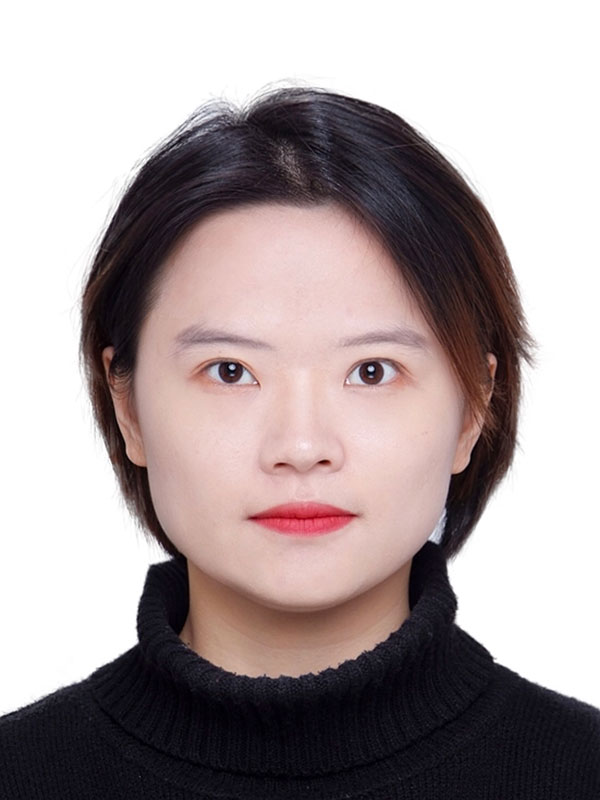
Juncheng Wang is a Research Impact Associate at UCA, based in Farnham. Her research explores virtual idols, digital identity, fan engagement and immersive media, alongside digital funding and financing in the cultural and creative industries. She brings experience in research, creative technology, interaction design and practice-based teaching.
Bio
Juncheng Wang is a Research Impact Associate in Research and Innovation at the University for Creative Arts (UCA), based at the Farnham campus. Her academic and professional experience spans digital media research, creative technology, interaction design and teaching. Her work brings together an interest in how people engage with emerging media and an understanding of the practical processes through which digital experiences are designed, produced and communicated.
Juncheng is completing doctoral research in Game and Creative Technology at UCA. She began the same doctoral project in Creative Technology at Bournemouth University in 2020 and continued it at UCA from April 2024. Her project examines innovation in virtual idols through fan interaction, emerging technology and business strategy. It considers virtual idols as both technological creations and cultural figures, with particular attention to the relationships between digital identity, audience engagement and virtual fandom.
Her research interests include social media, platform culture, immersive experiences and the emotional dimensions of audience participation. She uses approaches including sentiment analysis, content analysis and interviews to examine how audiences respond to digital media. This combination allows her to connect patterns in online engagement with the meanings people attach to virtual characters and mediated experiences. Her doctoral work sits at the intersection of communication, creative technology and the cultural and creative industries.
In May 2025, Juncheng presented “Exploratory Study Using Sentiment Analysis to Investigate the Influential Factors of Virtual Idols’ Popularity” at the International Symposium on Electronic Art (ISEA2025). Presented in the Altered Reality session, the study examined emotional dynamics and audience engagement with AI-generated virtual idols. This work forms part of her wider investigation into digital identity, virtual fandom and media technology, and reflects her interest in using audience evidence to understand emerging forms of digital culture.
Her publications also address gaming, immersive interaction and visual communication. Her chapter “The Evolution of Gaming in the Metaverse” appears in the CRC Press volume From Smart Cities to the Metaverse: Games, Immersive Experiences and the Future of Digital Interaction, published in 2026. The chapter explores immersive technologies, narrative design and user-generated content, including their cultural, social and economic implications. She also co-authored a 2019 article in Modern Communication on visual addiction in social networks, using WeChat Moments as a case study.
Alongside her doctoral research, Juncheng has contributed as a research assistant to a UKRI-supported study of digital funding and financing in Surrey’s cultural and creative industries. Her contributions include reviewing literature, analysing official datasets from DCMS, ONS and Nomis, and supporting evidence-based case studies across sectors including film, television and gaming. This work connects digital innovation with questions about how creative activity is supported and financed. A related collaborative manuscript remains in preparation.
Juncheng’s teaching experience includes supporting undergraduate and postgraduate learners with research design, critical analysis and dissertation development. She has developed structured sessions that guide students through topic formulation, literature review and methodology selection. Her approach uses staged guidance and formative feedback to help learners build confidence and independent research skills. She adapts explanations and activities to students’ different academic and technical backgrounds, with an emphasis on making research processes understandable and manageable.
In May 2026, she designed and delivered an AI Digital Human Creation workshop using Unreal Engine 5 and MetaHuman. The workshop connected practical production with questions about digital identity and media technologies. Participants worked through stages including AI generation, topology, UV mapping and real-time rendering. Juncheng developed learning outcomes, workflow documentation, demonstrations and guided exercises to support hands-on creation. The teaching combined technical instruction with opportunities for experimentation, iterative problem-solving and the presentation of personalised digital human assets.
She has also supported international educational exchange. In October 2025, she helped coordinate and host a five-day UCA visit for primary and secondary school art teachers from Hangzhou. Working with the Director of Academic Enterprise and Commercialisation, she contributed to planning, interpretation and academic and campus presentations. This experience complemented her teaching and research by bringing together communication, educational coordination and engagement across cultural and institutional contexts.
Before and alongside her academic work, Juncheng gained experience in digital production and design in China. At Metavision Studio, Communication University of China, she worked as a project manager on an interactive virtual reality film for iQiyi’s VR glasses. She coordinated with the director, 3D modellers and Unreal Engine technical team on planning, budgets and technical requirements. Her earlier roles included UI/UX design and project management at Yicheng Education & Technology, design and operations for the AI Challenger competition at Sinovation Venture, and publicity and social media management at Jiojio Art Studio.
Juncheng holds an MA in Digital Media Arts, specialising in Interactive Design, from the Communication University of China, and a BA in Artistic Designing from Wuhan University. Her training in design and digital media continues to inform her research and teaching. Across these activities, she connects the study of audience experience with practical knowledge of creative production, while developing work on research impact and the conditions that support cultural and creative industries.
Research statement
My research examines how emerging media technologies shape digital identity, emotional engagement and participation. My doctoral work focuses on virtual idols, exploring relationships between fan interaction, technological innovation and business strategy through approaches including sentiment analysis, content analysis and interviews. I also investigate immersive gaming and digital funding and financing in the cultural and creative industries. Across these areas, I connect audience research with questions about creative production and its wider cultural and economic context. My practice in interaction design and digital human creation informs how I approach these questions and communicate research through teaching.
Research outputs:
ORCID: https://orcid.org/0009-0001-7138-0560
- Wang, J. (2026). The evolution of gaming in the metaverse. In N. Nordin, N. Katuk, & A. Habbal (Eds.), From Smart Cities to the Metaverse: Games, Immersive Experiences, and the Future of Digital Interaction (Chapter 4). CRC Press.
- Lü, X., and Wang, J. “A Study on the Mechanism of Visual Addiction in Social Networks: A Case Study of WeChat Moments.” Modern Communication (Journal of Communication University of China), 2019.
- “Exploratory Study Using Sentiment Analysis to Investigate the Influential Factors of Virtual Idols’ Popularity.” Conference presentation, ISEA2025, May 2025.
Media enquiries
For media enquiries, please contact our Press Office Team: pressoffice@uca.ac.uk.